metaphors_2020

And A Little Child Shall Lead Them โ€“ Peacemakers 2020

On 12 August 2020, our Training and Development Advisor, Professor Joel Lee, published a blog post on the Kluwer Mediation Blog entitled โ€œAnd A Little Child Shall Lead Them โ€“ Peacemakers Conference 2020โ€. His blog post is reproduced in full below.

For more pictures and videos of the Peacemakers Conference 2020, please visit the Peacemakers Instagram and Facebook Page.


I have in previous entries (July 2012 and July 2013) written about a peer mediation initiative called the Peacemakers Conference. The purpose of the Peacemakers Conference is to teach 13-16 year olds how to resolve conflicts amicably in a workshop cum competition format. This yearโ€™s Peacemakers Conference was held from 20 to 22 July 2020.

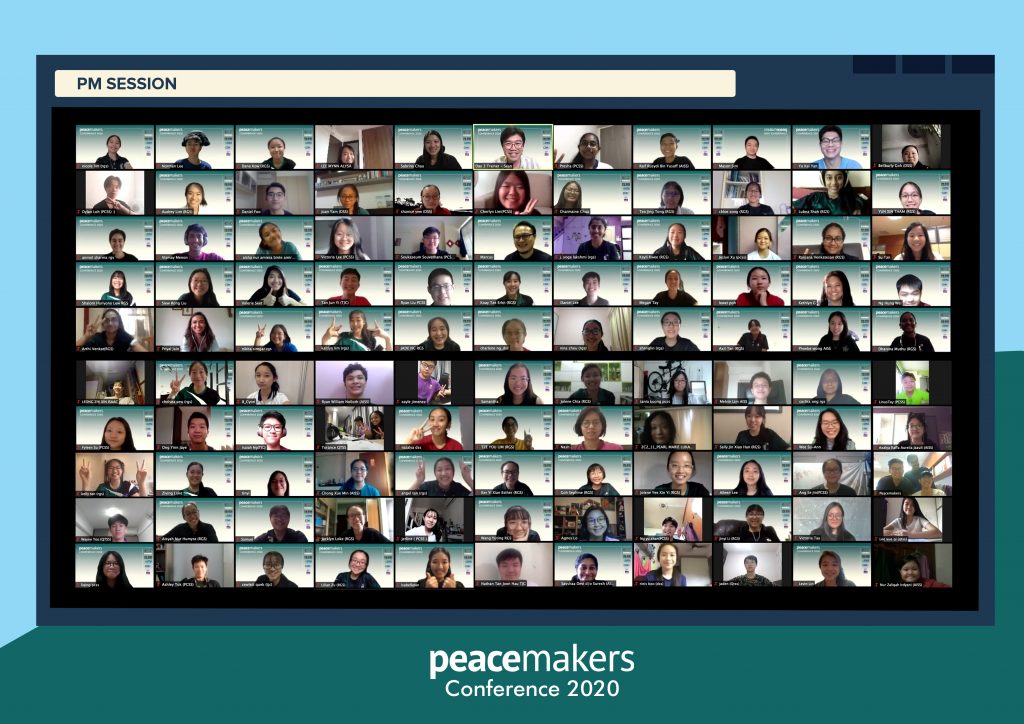
This year was unusual in that, because of COVID-19, the Peacemakers Conference was run entirely online. While this created its own stresses and uncertainties, it also gave us the opportunity to make the programme available to a much larger number of participants, 300 in total. It also allowed us to benefit from the coaching of mediators from the Singapore International Mediation Institute (SIMI), not just from Singapore, but from around the globe.

As in previous years, we asked students from different schools to work together to create a visual metaphor for mediation. This started in 2015 and has become a regular feature in the Peacemakers Conference. Metaphors from previous years be found in the entries for November 2015August 2016July 2017July 2018 and July 2019.

This year, the students came up with 16 visual metaphors which I would like to share with readers in this entry. For each of these, an image of the students presenting the metaphor is shared along with their description of the metaphor.

I would like to acknowledge the efforts of Mr. Samuel Teo, Mr. Sean Lim and the Peacemakers Facilitation team for capturing the the description and images of each of the metaphors that appear below.

1. Mediation is like an Egg Whisk

Mediation Metaphor 1: Mediation is like an egg whisk

Mediation is like an egg whisk!

The egg white and the egg yolk are two different things.

But when you whisk the egg, you are combining these two different things into one!

In the same way, each party has their own interests, so it is the job of the mediator to combine them and let the parties come up with a compromise.
The harder you whisk the egg, the silkier the egg becomes โ€“ synonymous to how the mediator should ask more open-ended questions to get to know the full story better, allowing for the parties to come up with a more effective solution. However, once you whisk the egg a tad bit too hard, you will make a mess. Continuing the metaphor, if the mediator does too much and comes up with their own solution for the parties, a mess could be made :O

That is why mediation is like an egg whisk.

2. Mediation is a Bridge
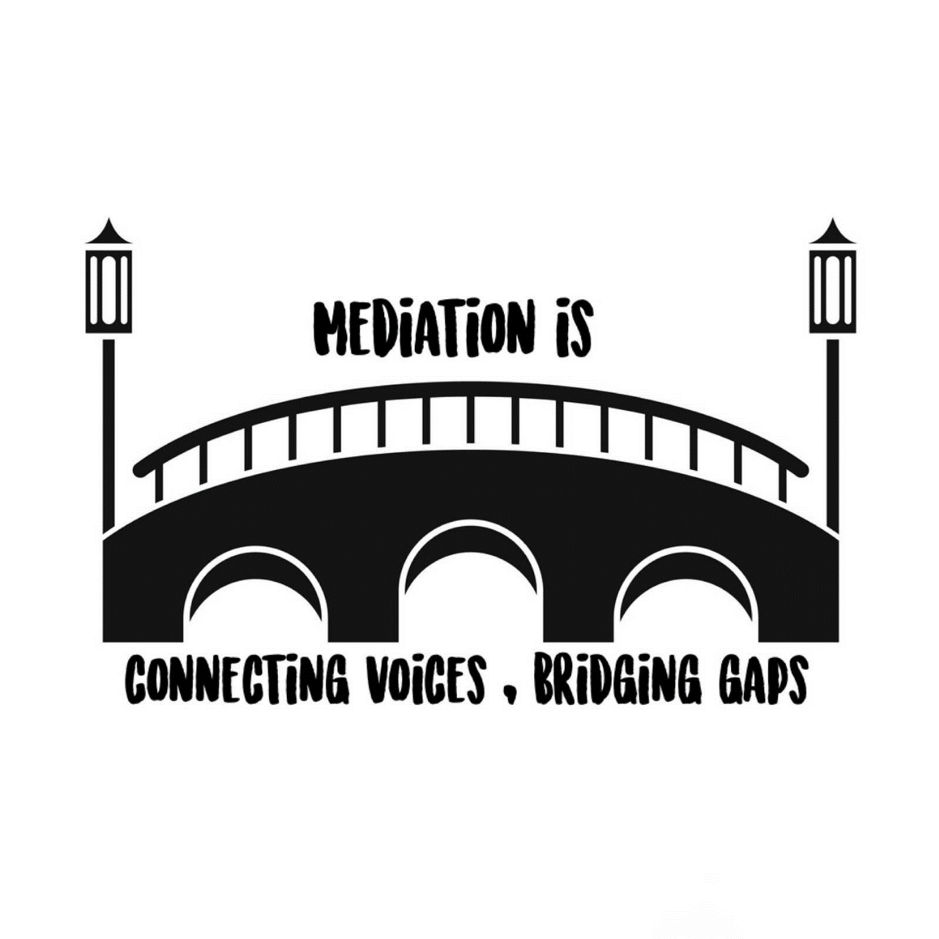
Mediation Metaphor 2: Mediation is connecting voices, bridging gaps

The process of mediation is like a bridge, it allow two people to connect together and work things out (just like how a bridge is built after 2 cities agree to build it and it connects between the 2 cities). After mediation, the gap that was formed during the conflict would be bridged and the conflict may be resolved.

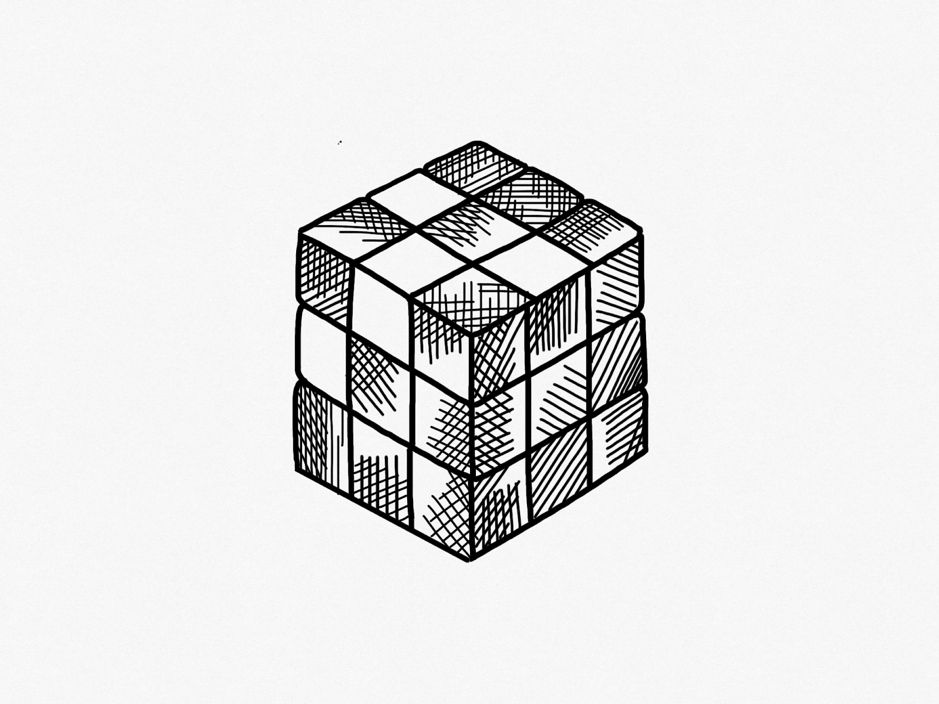
3. Mediation is a Rubikโ€™s Cube

Mediation Metaphor 3

Our group chose a rubikโ€™s cube because we feel that a rubikโ€™s cube requires us to consider the different sides to solve it. In the context of mediation, it represents the different perspectives we have to take into account of, when mediating a problem. There are stages to take when solving the cube which signifies the structured approach to resolve a conflict.

Furthermore, you may be overwhelmed with emotions โ€” be it experiencing a range of feelings and thoughts. This is when we acknowledge our feelings! For instance, we feel frustrated since the rubikโ€™s cube, or the problem, is difficult and hard to solve, stressed out when knowing that the methods do not work. Thus, we have to take a step back, take a break to calm down our emotions.

When you take a step back, youโ€™ll be thinking out of the box like, what should I do to make it all red on one side? Or Is there another way that I can prevent myself from using the wrong method?

This helps us to think of multiple solutions to solve the cube, while providing us a sense of accomplishment as it challenges us. Ultimately, weโ€™ll be happy and relieved when we know that the cube is solved, just like in mediation!

4. Mediation is like Magnets that repel but when in the right place attract

Mediation Metaphor 4: Magnets

When two different people with two opposing mindsets come together, they would repel like magnets facing the like poles. But when a mediator steps in, they start to come to an understanding and think alike, they turn around and attract.

5. Mediation is the Bridge over Troubled Waters
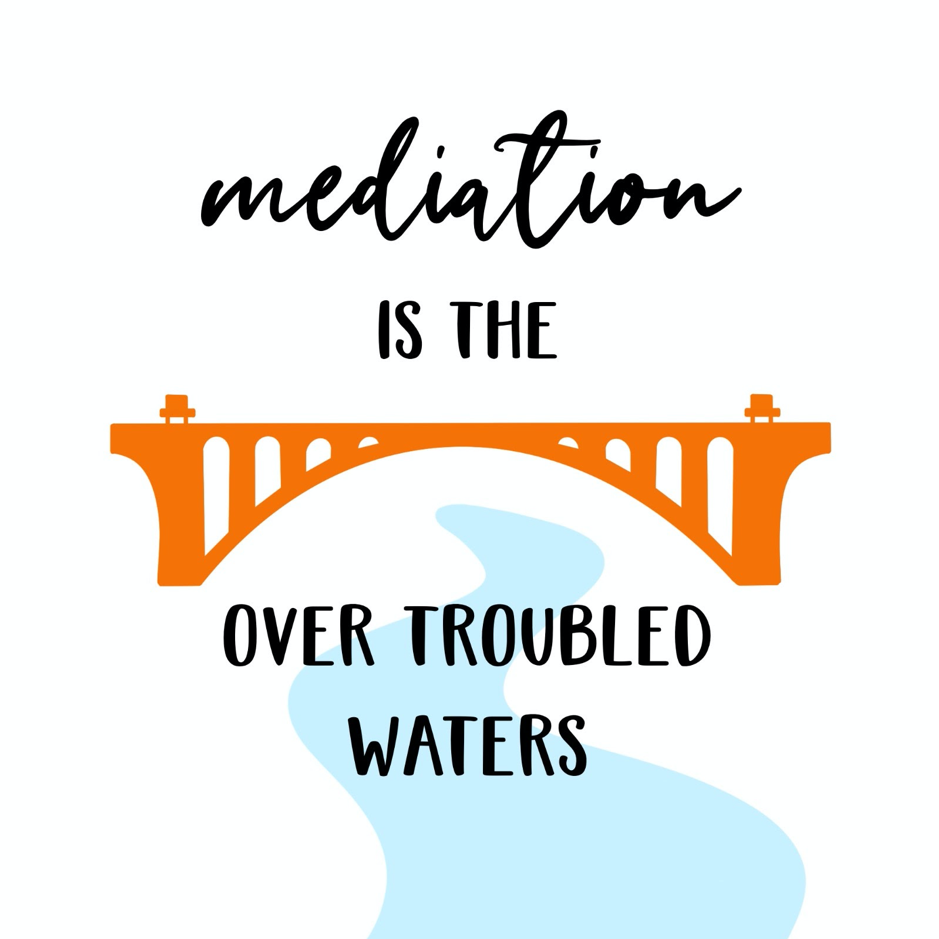
Mediation Metaphor 5: Bridge

We decided on the metaphor โ€œMediation is a bridge over troubled watersโ€ because a mediatorโ€™s role is to connect both partyโ€™s views. This helps each party to step into the otherโ€™s shoes to see from their perspective, like people crossing a โ€œbridgeโ€ to get to the other side, or a place where they are safe from the turbulent current that is their emotions (i.e: troubled waters). Once the parties reach the other side of the bridge (see from the otherโ€™s perspective) they can think rationally and make decisions without any prejudice as understanding each other without their conflicting emotions would make it easier for them to think clearly and come to an amiable conclusion.

6. Mediation is like Autumn

Mediation Metaphor 6: Autumn

It is the bridge between summer and winter, like how it is the connection between two opposing parties. Being the season of harvest, it also reaps bountiful produce, like the bountiful results of mediation, with a comfortable and peaceful atmosphere devoid of the droughts of impulse and the blizzard of violence. The mixing of different leaf colours, red, yellow, green, too symbolise the mix of various emotions that come up, and all equally fall down to the carpet of serene foliage below.

7. Mediation is like a pH scale
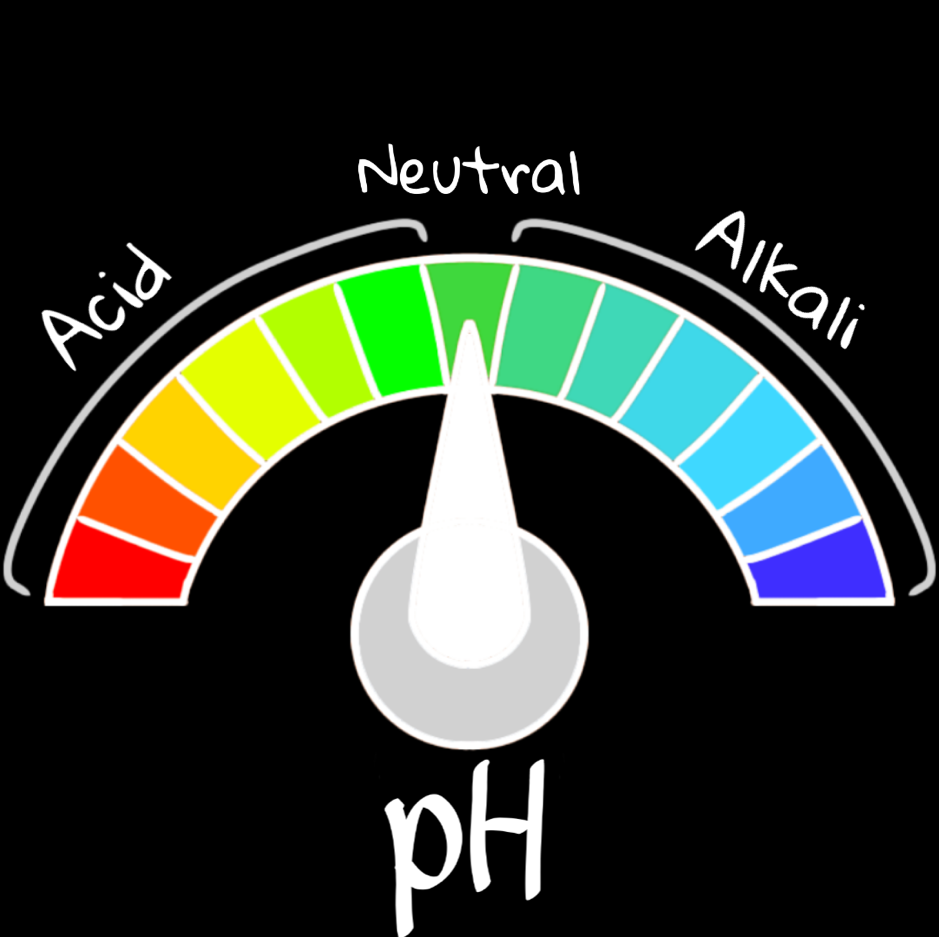
Mediation Metaphor 7: PH Scale

A Mediator is like a pH scale.

A Mediator is someone who aims to get both opposing parties together and help them understand each other better, resolving misunderstandings.
Likewise, the alkali must meet the acid in order to neutralise and become stable.

8. Mediation is like Penguins
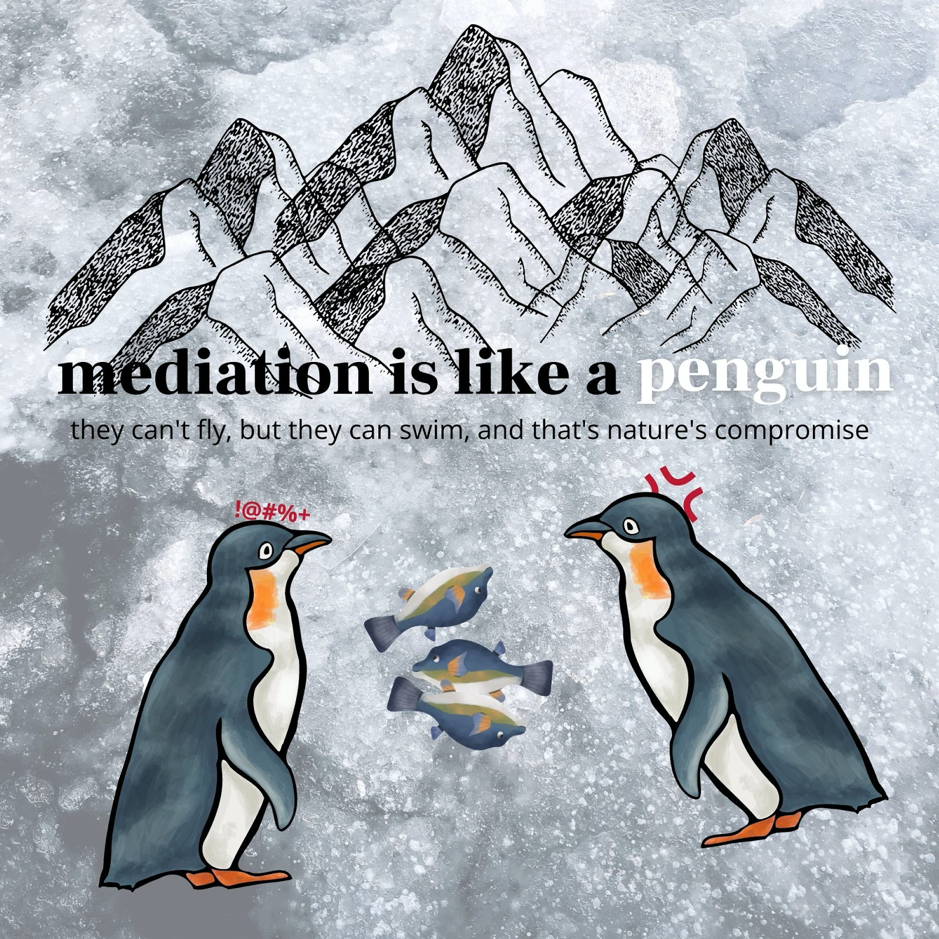
Mediation Metaphor 8: Penguin

Story: One day, a new animal was to be created, in this new animal, both colours wanted to be different kinds of animals. On one hand, the black colour, remembers its time as a black betta fish. It thought, โ€œHow beautiful! I want to be a fish again and swim in the waters! On the other hand, the white colour remembered its time as a dove. It thought, โ€œHow graceful! I want to be a bird again and travel at high speeds!โ€ However, the two colours could not decide on what type of animal they wanted to become, and so they fought and fought.
One day, a mediator came into the picture. The creator decided that the fighting was unhealthy and decided to end this conflict once and for all, so the creator invited the two colours to a mediation session to which they both agreed. During the mediation session, both colours shared their interests and positions, after the sharing, they better understood one another and came to a compromise. They decided to create a special animal, a beautiful bird which would swim gracefully at high speeds. Behold, the penguin was born!

Explanation: In mediation, there are two parties who come together with a mediator to allow the parties to resolve an argument and arrive at a solution. In the case of the penguin, the black and white colours represent the two parties, coming together into a singular body in agreement. The black colour wanted to be a fish and swim just like it had done when it created the betta fish. However, the white wanted to be a bird and travel quickly and gracefully like it had done as a dove. The polar opposite animals were too different, and they couldnโ€™t come to an agreement. However, through mediation, they thought creatively and created a new and special animal โ€“ The penguin! As a penguin, black got to swim in the waters and white got to move quickly and gracefully, hence resolving the argument.

9. Mediation is like a Diamond
Mediation Metaphor 9: Diamond

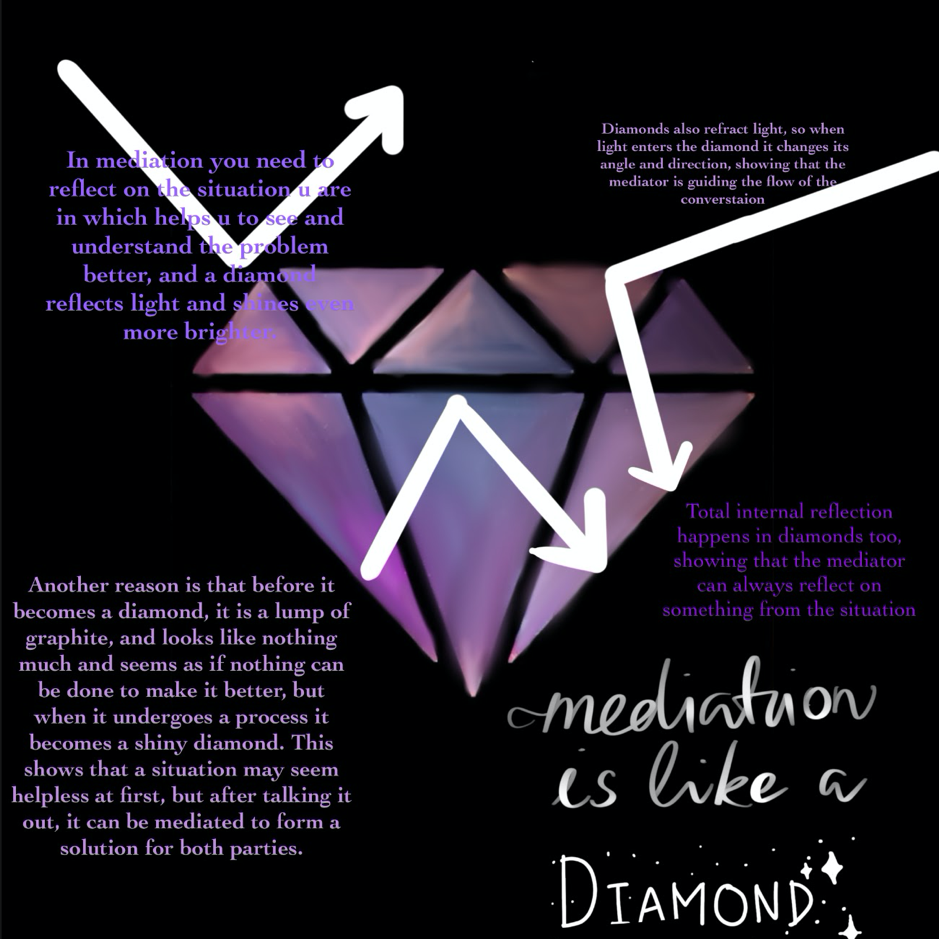
In mediation, you need to reflect on the situation you are in which helps you to see and understand the problem better, and a diamond reflects light and shines even more brighter. Another reason can be that before it becomes a diamond, it is a lump of graphite, and it looks like nothing much and seems as if nothing can be done to make it look better, but when it undergoes a process then it becomes a shiny diamond. This can show that the problem you are facing may seem like it cannot be helped at first, but after talking it out then it can be mediated and everyone will be happy. A diamond also refracts light, so like when light enters the diamond it changes its angle and changes direction, so itโ€™s like the diamond (mediator) is guiding the light (thoughts/conversation of the disputants)

Summary: A diamond is extremely precious yet fragile, a diamond has a lot of reflections that can represent different perspectives just like how a mediator sees different points of views.

10. Mediation is Key
Mediation Metaphor 10: Key

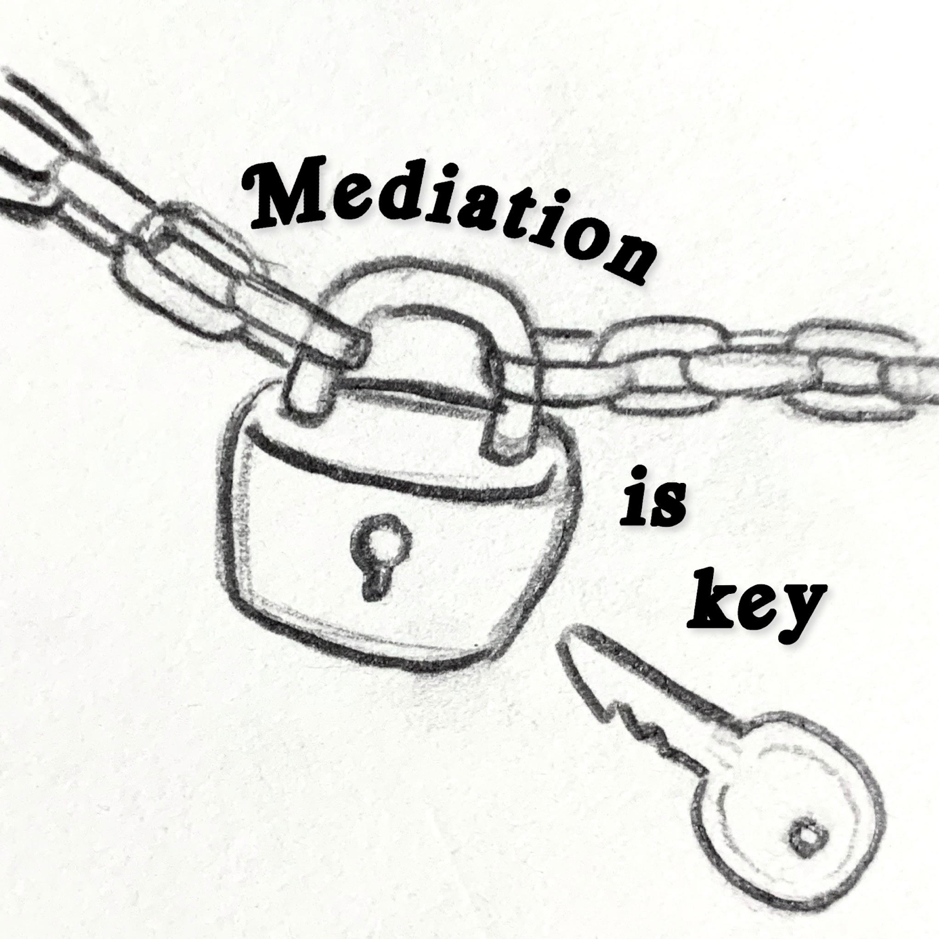
The key is mediation while the two chains connected are the two conflicting parties. The lock is the conflict. The aim of mediation is to facilitate a discussion and help both parties understand each other. Thus, unlocking โ€œpeace โ€œ between both parties.

11. Mediation is like Polishing a Diamond
Mediation Metaphor 11: Polishing diamond

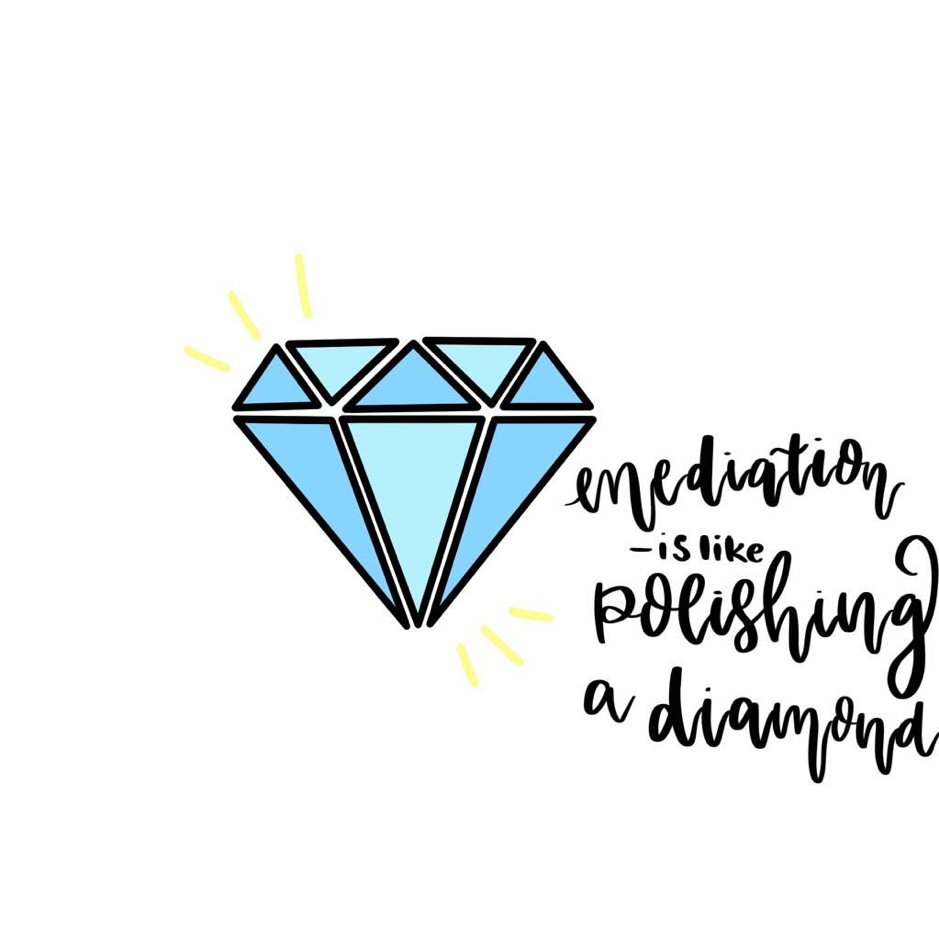
The diamond signifies the relationship between the two parties that have many problems. The unpolished diamond it was before signifies the misunderstandings and conflicts between the parties. These make the relationship sour and ugly. However, when polished or through mediation, the unpolished diamond or unhappy relationship becomes better. Even though mediation does not always solve the problems, the end product is always better than before the polishing process. Ultimately, mediation is a process. It may be a painful process, with having to open up about the ugly truths and be honest and slightly uncomfortable. But in the end, the outcome is satisfying and priceless. Moreover, the diamond is more reflective after the whole polishing process, signifying that the relationship is more open to new ideas and that there are fewer bumps (literally) in the relationship. Hence, mediation is like the process of polishing a diamond

12. Mediation is like Balancing a Beam
Mediation Metaphor 12: Balancing Beam

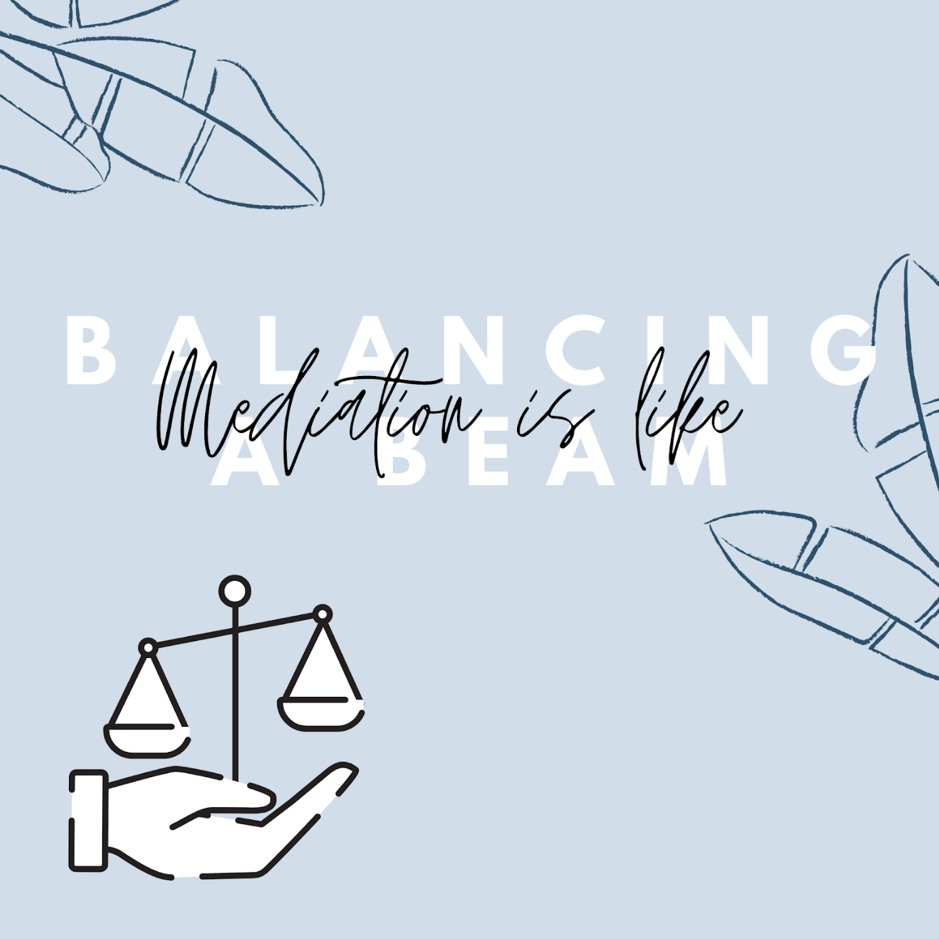
Striking a balance between all parties is a key facet of mediation. There are three main people in mediation, two parties, and one mediator. With each party standing on one side with varying (literal) positions and interests of different โ€œweightsโ€, it is inevitable that the beam balance teeters and tilts to one side โ€“ signifying an unstable relationship between the two. At this moment, the mediator has to be in the middle to remain impartial and neutral. If he ever moves to either side, the beam balance collapses. But with his prowess in mediation, he has the capability to draw both of the parties to the middle to reconcile their differences. With this, the beam balance achieves a balance and the conflict is resolved.

13. Mediation is Water

Mediation Metaphor 13: Water

Mediation is water. Water molecules are highly cohesive and it shows how mediation brings people together. Water is also pH 7, a neutral ph, so mediation is a neutral part that is unbiased, helping two parties resolve the conflict. Also, water is calming, which shows that mediation should be a calm and slow process. Water is also known to be a universal solvent in our bodies, showing how mediationโ€™s aim is to dissolve any conflict. Water is also a cooling element that extinguished the fire between two conflicting sides. Mediation is water.

14. Mediation is a Lightbulb

Mediation Metaphor 14: Lightbulb

A light bulb, an essential part of our everyday lives, connects the circuit and allows the circuit to work. This is similar to how a mediator connects two or more parties, enabling the mediation to run smoothly. A light bulb can be used to guide us in the dark to allow us to arrive at our final destination with ease, which is similar to how a mediator guides the parties to reach a settlement which they can all agree on. A lightbulb also represents a โ€œeureka!โ€ moment, or realisation, just like how mediation helps parties understand each other and realise their similarities and differences, and help parties take a step closer to talking their problems out properly in future.

The four-step process of mediation is akin to how a circuit functions:

OPENING โ€“ Turning on the switch of the electrical circuit

INFORMATION GATHERING AND CHECKING โ€“ Electric current runs through the wires of the circuit

PROBLEM SOLVING โ€“ The light bulb is lit up, and we can use the light emitted to navigate our way through the dark

CLOSING โ€“ We have successfully found our way!

15. Mediation is the Rose from Beauty and the Beast

Mediation Metaphor 15: Rose

The rose has thorns, which symbolises the initial argument and the negative emotions between the two parties. The mediator has to treat the issue sensitively, so as to not induce hurt from the thorns. However, over the course of the mediation, the rose starts to become more beautiful, indicating the โ€œbrightโ€ possible outcome of the issue. Just like how the rose brought together Beauty and the Beast, mediation brings together two parties through mutual understanding and building trust. There is also a common end goal to not let all the petals fall. Similarly, if the mediation is not done, the dispute will continue to increase in severity (i.e. the petals keep falling until the beast can no longer turn back into a human). Lastly, the rose is kept in a glass case, just like how whatever is said during the mediation session will stay confidential and within the group.

16. Mediation is like Boba

Mediation Metaphor 16: Boba

Just like boba in bubble tea, the mediator is an additional element during a discussion between parties and is not necessarily present for all conflicts. However, when conflicts occur, it is ultimately the presence of a mediator that grants peace to the discussion, allowing it to come to an amicable conclusion. Like how boba sweetens milk tea, a mediator sweetens a friendship and makes it pleasant for both parties.

Just like a boba in the sea of milk tea, a mediator may be surrounded or even flooded by all the tensions arising from the two parties, whether it be unpleasant emotions or incessant accusations. However, like boba, the mediator must remain strong and cannot crack under pressure, maintaining a game face throughout the discussion. Moreover, just as how boba has an inner view of the milk tea from within, (literally) beneath the surface, a mediator should seek to achieve a deeper understanding of both parties and the underlying Interests beneath their Positions.

While boba is a delicious bubble tea topping, it does not change the essence of the milk tea; likewise, a mediator should not change the essence of the partiesโ€™ words when reframing the situation, and neither should they be evaluative and add their own biases to the discussion. In addition to that, boba does not tend to one side of the cup. Instead, they are spread equally throughout the entire drink, giving the taster an equal chance to savour the boba. Likewise, a mediator should remain neutral throughout the discussion and not lean towards either party, being careful not to display any signs of bias in his/her body language or speech. Furthermore, a boba is always spherical and all-rounded, signifying neutrality. Likewise, a mediator should always be sure to put on an appearance of neutrality, regardless of his/ her personal inner judgements, if any.

Like the bobaโ€™s smooth texture, a mediator should always be SMOOTH in conversations, taking note of delivery such as pace and volume. Besides that, boba is very chewy and cannot be swallowed immediately. Likewise, it is impossible to reach a compromise right from the beginning, and everyone needs to take the time to digest one anotherโ€™sโ€™ perspectives in order to reach a satisfying conclusion.

Overall, just as how adding boba to your milk tea is supplementary, a mediator is an extra accessory when it comes to managing conflicts just like when you add boba to your milk tea. However, just like boba, a mediator makes conflicts easier to manage and a nicer process than if you were to just get the milk tea without boba. Without boba, one can still drink the bubble tea, but it might feel like something is missing. Likewise, without the presence of a mediator, two parties may still be able to resolve a conflict, but it may leave a bad aftertaste.


As Singaporeโ€™s leading peer mediation experts, Peacemakers has an extensive track record of managing and delivering conflict resolution training for youth at both local and international levels. If you would like to train your youth to better manage conflict, let us know how we can help via email at mediate@peacemakers.sg.
peacemakers am2

Peacemakers Conference 2020 - Report

By Samuel Teo on behalf of the organisers of the Conference

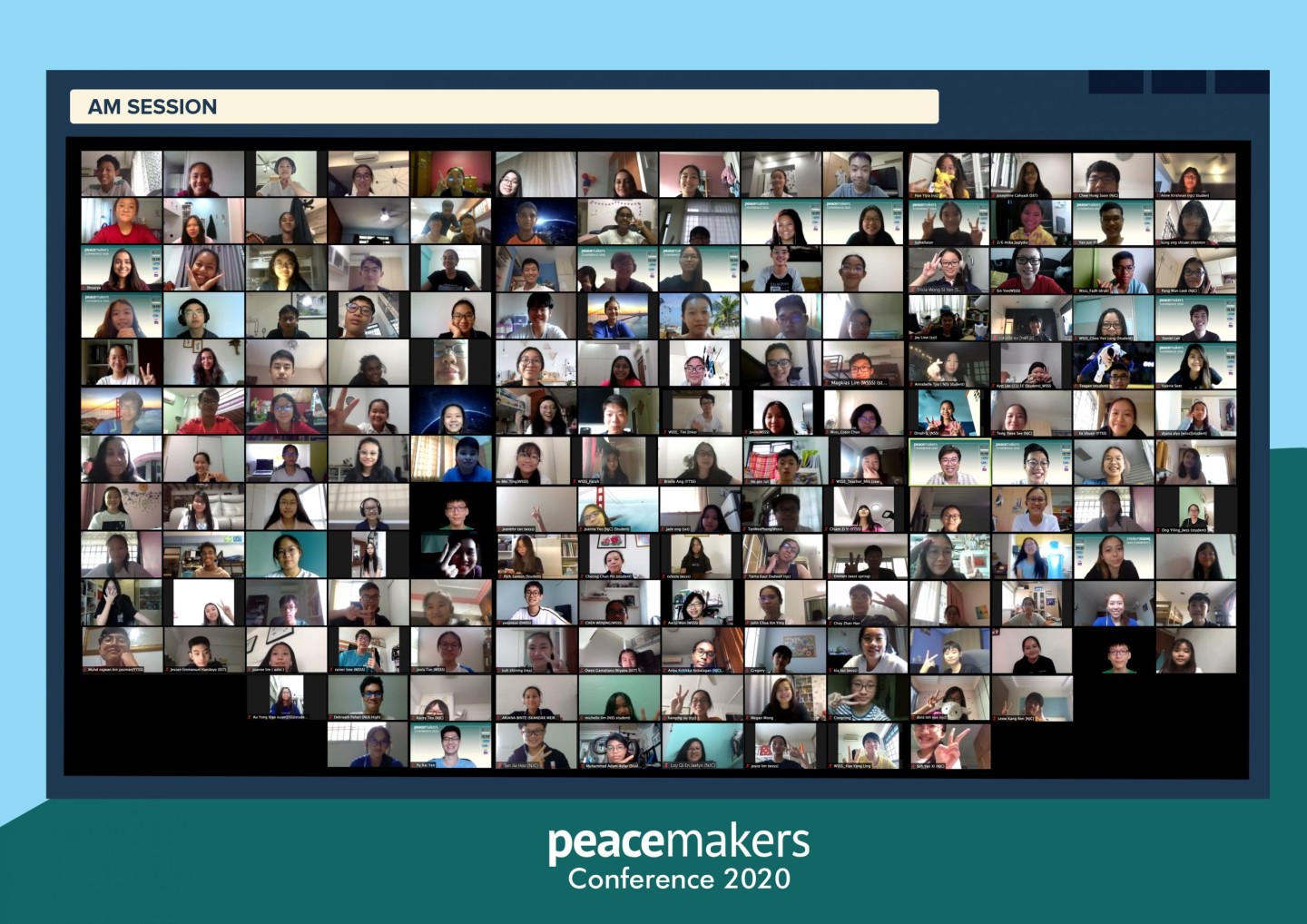
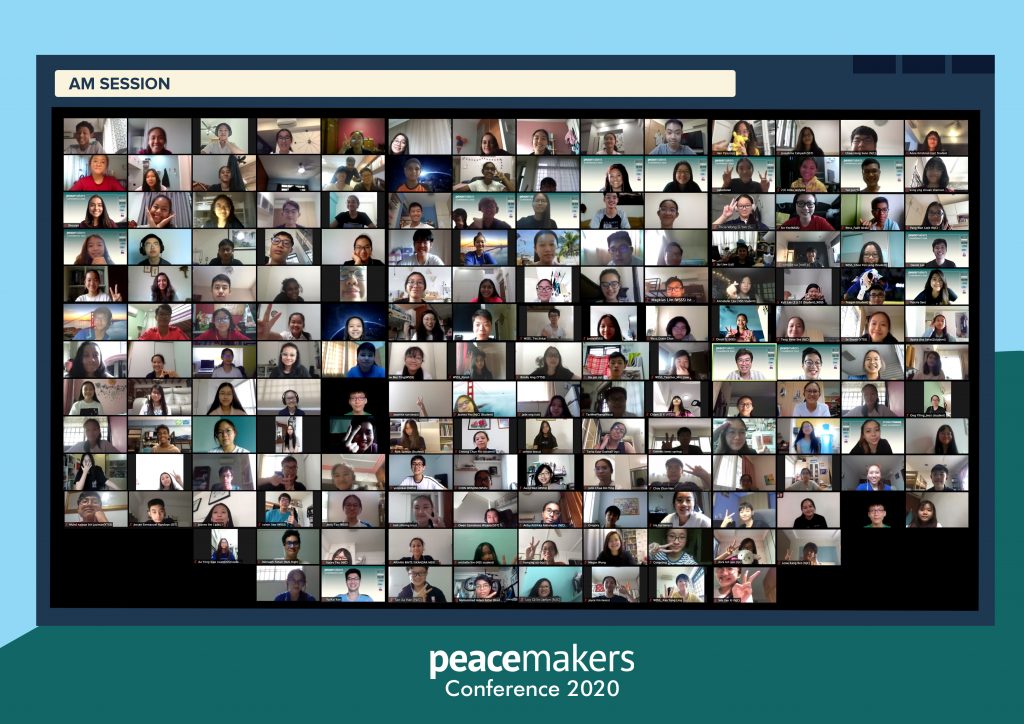
For the first time ever, the Peacemakers Conference 2020 was conducted virtually via video conferencing on Zoom. Taking place from 20 to 22 July 2020, the Conference aimed to teach 13 to 16 year olds valuable mediation skills and how to resolve conflicts amicably.

In total, we were delighted to host over 300 participants from Admiralty Secondary School, Ahmad Ibrahim Secondary School, Assumption English School, Damai Secondary School, Dunearn Secondary School, Evergreen Secondary School, Jurong West Secondary School, National Junior College, Northland Secondary School, NUS High School of Math and Science, Peicai Secondary School, Queenstown Secondary School, Raffles Girlsโ€™ School, School of Science and Technology, Temasek Junior College, Welham Girlsโ€™ School (Dehradun, India), West Spring Secondary School, Woodlands Secondary School, and Yishun Town Secondary School. This is the largest and most diverse cohort of students that we have ever received in the 11 years Peacemakers Conference has been running. 

Additionally, we were blessed to have almost 60 student facilitators from the NUS Faculty of Law and SMU School of Law, and more than 50 professional mediators who took time off their busy schedules to help out in various capacities at the Conference.

Learning the Principles of Peer Mediation for Effective Peacemaking

Over the course of the Conference, the participants were exposed to mediation as a mode of amicable conflict management. Our lead trainers, Mr Juegan Lingam, Ms Tan Su, and Ms Valerie Seet trained them in the foundational principles of mediation, the process of peer mediation, and the basic elements of collaborative problem solving. 

The participants also learned the importance of maintaining neutrality as mediators, and assuring parties of the confidentiality of the process. In terms of facilitating communication between two disputing parties, the trainers emphasised the importance of gathering information in order to identify partiesโ€™ interests behind their positions and to harness that to guide parties to  problem-solve by generating fair solutions that achieve both partiesโ€™ desired outcomes. Lastly, our trainers focused on the skills involved in effective communication and managing emotions, such active listening and reframing.

Practising Mediation in a New Virtual World

In the โ€œnew normalโ€ brought about by the COVID-19 pandemic, online mediation is becoming an increasingly ubiquitous phenomenon. Having to move the Conference online, we wanted to capitalise on the convenience of the online format to reach out to even more students, whilst tweaking the existing workshop model to keep the Conference as engaging for the participants as possible to ensure that they still got the best experience despite the new format.

The participants got to know each other and the facilitators better during the icebreaker activities online, which consisted of games optimised for the virtual platform. The content of the Conference was delivered through a combination of large group lectures, and small group exercises, where participants were encouraged to practice what they had just learnt through a series of challenging but relatable role play scenarios. 

To ensure that participants received constant guidance throughout their learning, a typical small group exercise consisted of three participants and at least one facilitator. The participants took turns to role play as parties and mediators in hypothetical disputes. These role plays were drafted in a way that they would be relatable to students in secondary school, from conflicts between CCA leaders arising out of limited space for training in school, to disputes between school friends over more personal issues.

It was encouraging to see participants enthusiastically taking down notes while listening to our trainers from the comfort of their own home. Participants also actively asked questions over the chat function on the video conferencing platform, and even bonded with their fellow participants during the breaks that were scheduled throughout the session. It was heartening for the organising committee, facilitators, and coaches alike to see so many happy and eager faces over video.

Mediation as a Diamondโ€ฆ or Boba?

As with previous years, participants were given the opportunity to work in groups to create visual metaphors for what mediation is to them. Participants were encouraged to think about how they would complete the phrase โ€˜Mediation isโ€ฆโ€, and as usual, we received very interesting submissions. Each group also did a short presentation on their chosen visual metaphor. 

To give you a taste of their creativity, we will briefly share two metaphors with you. The first is โ€œMediation is like an Egg Whiskโ€, and secondly, to commemorate the beverage that took the nation by storm during the Circuit Breaker period, โ€œMediation is like Bobaโ€! Our participants explained that mediation is like an egg whisk because the mediatorโ€™s role involves bringing together two distant parties, represented by the egg white and yolk, and doing so in a delicate manner to avoid making a mess. Participants also felt that mediation is like boba because it adds to the experience of just drinking milk tea - akin the mediatorโ€™s presence adding value to the process towards conflict resolution!

Concluding Remarks

The organisers would like to express their heartfelt gratitude to the many people that made the Peacemakers Conference 2020 such a great success. First and foremost, we would like to thank the Singapore International Mediation Institute, the Community Mediation Centre, the NUS Collaborative Dispute Resolution Club, Sage Mediation, ShopBack, and Iโ€™m Kim Korean BBQ for supporting the Conference. Without them, the Conference would not have been the success that it was.

We would also like to thank all the facilitators and coaches who volunteered their precious time to invest in the participantsโ€™ mediation training. The coachesโ€™ dedication, patience, and wisdom are greatly appreciated, both by the organisers as well as the participants.

Finally, we are incredibly grateful for the energy and enthusiasm shown by our participants. Over the course of the conference, you asked brilliant questions, were incredibly diligent, and very capably put all that you had learnt into practice. It has been such a joy to see how everyone has grown in confidence and proficiency as mediators in such a short period of time. While watching you grow and learn, we have learnt much from all of you as well.

For many of us, this is just the beginning of our journey as peacemakers. We have full confidence that the lessons learnt will be shared with our peers, and hope to see everyone continuously hone our skills and grow as mediators!


For more pictures and videos of the Peacemakers Conference 2020, please visit the Peacemakers Instagram and Facebook Page

As Singaporeโ€™s leading peer mediation experts, Peacemakers has an extensive track record of managing and delivering conflict resolution training for youth at both local and international levels. If you would like to train your youth to better manage conflict, let us know how we can help via email at mediate@peacemakers.sg.
LinkedIn cover - 7 keys (1)

The Youth Shall Lead Us

Develop a Generation of Peacemakers Through Peer Mediation Programs

Aloysius Goh1, Sean Lim2, Samantha Lek3 & Megan Tay4


Many peer mediation programmes (PMPs) set out to teach youth conflict management. Yet, having offered one such PMP annually since 2010, we have found that we have learnt as much, if not more, from them. 

Humbling as it may be for adults to admit, the sages who can unlock the Golden Age of mediation may actually be the youth.

What is โ€œPeer Mediationโ€?

โ€œPeer Mediationโ€ describes the process in which a young person facilitates the communication between two or more peers who are in a dispute and leads them to an amicable solution. 

Relevance of Peer Mediation 

Thanks to technology, youth wield phenomenal influence over each other. If you were born in the last century, it can be hard to imagine life as a young person today where you are constantly able to befriend others and become victims of hate speech and fake news. Cloaked as online personalities, hate and frustration can be vented with little fear of the consequences. It is also not unusual for comments to be โ€œlikedโ€ and โ€œsharedโ€ within minutes by thousands around the globe. In this world, which is by design separate from that of previous generations, conflicts regularly arise and spiral quickly out of control. The youth often find themselves in situations where simple apologies no longer suffice to resolve the original conflict. Prompt conflict de-escalation by friends makes a difference. This is why many schools have introduced PMPs.

Mediation and Leadership in Schools

School-based PMPs go beyond conflict management education.

The Peacemakers Conference5 is one such PMP. Framed as a leadership bootcamp where youth learn key skills like exercising self-control, resilience to negativity, and responsibility for their community, the Conference is in substance a mediation workshop-cum-friendly competition held over 3 days. Led by international mediation professionals and undergraduate students, Peacemakers has trained more than 850 Southeast Asian youth in mediation and has drawn the support of the International Mediation Institute, the Asian Mediation Association and the Singapore Ministry of Law.

Evidence of Peacemakerโ€™s success comes most from the appreciation notes the organisation receives from the Conference alumni. One teacher shared how a Peacemaker graduate prevented a fight between his classmates and not only averted suspension for them but fostered a strong class spirit. Another student confided that she convinced her quarrelling parents to seek professional mediation assistance and saved the family from breaking up.

Indeed, PMPs make the greatest impact for youth from challenging backgrounds. With a richly textured emotional vocabulary, their demonstrations of empathy often bear an authenticity that moves the observer. Their transformation during the Conference from misunderstood delinquent to creative problem-solver proves that leaders and mediators can be nurtured.

When the youth are taught to ask โ€œwhyโ€ and not just โ€œwhat happenedโ€, they learn to look beyond angry accusations. Instead of seeking to attribute fault, they learn to suspend judgment, be attentive to the context, and consider the emotions of others. With a new appreciation of the purpose of communication, they guide their friends to exercise self-control, reflect on deeper motivations, and create innovative ways to solve the problem.

PMPs compel the youth to acknowledge that while conflict may be inevitable, violence is not. When someone disagrees with them, it need not be because their comment was wrong or foolish, but because the person did not understand fully. Learning that โ€œthere is no failure, only feedbackโ€, they become resilient to criticism and conscious that naysayers often seek to conceal their own inadequacies by pointing out the splinter in the otherโ€™s eye.

On a social justice level, the youth discover that resolving conflict amicably is something all of us can and should do. They gain confidence to resolve their own conflicts through communication. They see that the power to resolve conflicts lies in their hands and take ownership of the peace and well-being of others within their community.6

Recommendations

Although there are many PMPs in educational institutions worldwide, the majority of schools have yet to devise and introduce one. One way to improve the situation is for existing PMP providers to share tools for โ€œtraining trainersโ€ and materials that will inspire and enable teachers to draw on local and international experience. For those interested in running a PMP, three suggestions from Peacemakersโ€™ organisers are: 

Institutional Support and Educator Role-Modelling

Unsurprisingly, PMPs which made the greatest impact were fronted by staff invested in promoting the use of mediation in school. By reducing reliance on authoritarian forms of rule-enforcement-based problem solving, peer mediation represents a paradigm shift in the teacher-student dynamic. Teachers must trust in the studentsโ€™ ability to lead the resolution of their conflicts. As mediating can be psychologically stressful, peer mediators should know of available mentoring support. This can be trained school staff or professional mediator volunteers who help triage the conflicts appropriate for peer mediation and determine which should be escalated for administrative intervention.

Relevance

Role plays which mirror the youthโ€™s experiences and struggles will help them better appreciate the relevance of peer mediation. Rather than lectures abbreviated by anecdotes, the right pedagogical mindset is practice abbreviated by lectures. The youth generally love a good challenge and have a lifegiving ability to laugh at themselves. However, many also struggle with adolescence and may feel awkward when searching for the correct intervention. With a blend of humour and gravitas, the practices will provide the youth with the self-confidence and competency to be leaders and peacemakers. 

Keep Things Simple

An effective PMP keeps things simple and focused. One of Peacemakersโ€™ greatest challenges has been to include all the well-intentioned advice from stakeholders into a limited time frame. Schools are busy places and sustaining the youthโ€™s interest can feel impossible. While encouraging the young peacemakers to be ambitious, a PMP is most effective when it focuses on the small steps to de-escalate and resolve conflicts. One tool that can help peer mediators beyond the workshop is a behavioural guide printed on a wallet-size card. An example of a Peacemaker Code reads:

  • Donโ€™t be a mere spectator to fights
  • Listen actively
  • Suggest constructive solutions
  • Acknowledge othersโ€™ emotions
  • Take a breath before reacting
  • Donโ€™t pass on fake news/rumours
  • Be responsible for your community
  • Communicate empathy.

Conclusion

The following lyrics sum up our thoughts succinctly:

โ€œI believe the children are our future
Teach them well and let them lead the wayโ€7

Let us raise a generation who will serve as agents of peace, and truly bring about the Golden Age of peace we mediators hope for.


69151956_2473134832916454_123386546328961024_o

International Mediation Singapore 2019 Report

Head over to our Facebook page @theSIMIchat for photos of IMSG 2019 and notifications about upcoming events.
To see the results, click here.

On 2ndAugust, 140 students comprising 40 teams from 17 countries participated in the first ever international mediation competition in Singapore.

Teams came from all around the world - Bangladesh, Brazil, China, France, India, Indonesia, Kenya, Malaysia, Maldives, Mongolia, Nepal, Norway, Pakistan, Singapore, Sri Lanka, United States of America, and Vietnam - united in a shared passion for mediation.

Over three days of intense competition and five challenging mock mediation cases, the participants put their collaborative dispute resolution skills to the test as mediators and mediation advocates. As the launch event for the week leading up to the signing of the Singapore Convention on Mediation on 7th August 2019, IMSG was more than a competition - it was a platform for connecting the next generation of thought leaders and practitioners in the mediation and alternative disputes resolution industry.

Aside from experiencing different mediation and advocacy styles practiced by other cultures, students also had exclusive opportunities to interact with leading SIMI Accredited or SIMI Certified Mediators, who attended as exclusive invitees of IMSG as the judges for the competition.

There were also a host of networking events: a memorable Opening Reception at โ€œThe Spotโ€, surrounded by beautiful views of the Marina Bay, Singapore; a cosy Mid-Event Reception combined with the book launch of the Singapore Mediation Handbook held at the oldest law school in Singapore, the NUS Faculty of Law, Bukit Timah Campus; and a grand Closing Reception at the Grand Ballroom InterContinental Singapore.

Mr Benedict Koh, a third-year law undergraduate at the Singapore Management University said, โ€œIMSG opened my eyes to the wider universe of alternative dispute resolution. Beyond the medals, honour, and glamour, what truly made this event worthwhile was the invaluable opportunity to further hone my skills in this field and to learn from the perspectives and stories of my new friends from around the world. Definitely looking forward to what IMSG 2020 will bring!โ€

Coaches also had positive comments on the unique format of IMSG, with one coach crediting the competition format and the detailed feedback for helping her team to grow. โ€œAll teams were given the chance to mediate and advocate all five problems, regardless of how they did in previous rounds. This meant that after every round, my team would direct their focus on how they could do better in the next round. This really helped them to progress. At the same time, I appreciate that my team is to receive not just their results, but also a detailed breakdown of their areas of strength and improvement. The thoughtful way in which this competition was run helped promote a growth mindset, benefitting my team even after the competition.โ€

About the IMSG Competition Format

There are many distinctive features of the IMSG Competition Format, with the key points being:

  • Non-elimination: all teams competed in all five rounds.
  • Power-pairing: teams are matched against other teams with a similar performance record.
  • All participants are medalists: every participant received either a Bronze, Silver or Gold medal, depending on their performance.

Each round lasted for 90 minutes and required each team (comprising of three to four members) to nominate two members to compete as Mediation Advocates, and one member to compete as a Mediator. Each round therefore would contain two pairs of Mediation Advocates and one Mediator, all from different teams. After each round, the SIMI Mediator judging the round would provide personal feedback. A detailed feedback report for each team would be compiled by the organising committee and mailed individually to each team a few weeks after the end of the event.

Appreciation and Concluding words

As the main organisers, the team at SIMI would like to express their heartfelt gratitude to everyone who helped make IMSG 2019 a success:

First, to the directors of SIMIโ€™s board and especially to the Chair, Professor Joel Lee Tye Beng, for their ever-present support and enduring faith in our work. IMSG would not have been possible without their guidance and wisdom.

To the executive team at SIMI, Mr Marcus Lim and Ms Jessica Low, for their leadership and expertise.

To the co-organisers, the NUS Collaborative Dispute Resolution Club, Peacemakers Consulting Services, and the Peacekeeping and Conflict Resolution Team: without you, this event would not have been possible. Thank you for working alongside us to turn this event from a dream into reality. Most importantly, for being brilliant people to work with and great companions through thick and thin.

To the NUS Faculty of Law, who generously agreed to host IMSG at the Bukit Timah Campus: thank you NUS Faculty of Law and to the Dean, Professor Simon Chesterman for your generosity and dedicated support for our work.

To our corporate and individual sponsors: The 1872 Clipper Tea Co, ADR ODR International, Gloria James-Civetta & Co, LexisNexis, Drew & Napier, Maxwell Mediators, Singapore Mediation Centre; Mrs Chia Swee Tin, Ms Lin Wenrong, and Ms Viviene Sandhu. Thank you for your vision, kindness and support โ€“ your contributions were invaluable to the eventโ€™s success.

To our SIMI Mediators: thank you for your time and for sharing your priceless experience with the participants. Your role as judges was an integral factor for providing the teams with a positive learning experience.

To our tireless and resourceful volunteers from NUS Law, Singapore Management University, Singapore University of Social Science, Temasek Polytechnic, and Singapore Polytechnic: thank you for your effort, initiative, time, and energy. It takes almost as many volunteers as participants to run an event and we are grateful for each and every one of you.

Finally, to our participant teams and their coaches: thank you for your passion, enthusiasm and willingness to give your best effort. We were impressed by the level of skill demonstrated by the teams and hope to see an even greater interest in mediation moving forward. We would also like to extend our gratitude to all coaches for the training that they provided to their teams. The quality of mediation and mediation advocacy that was fielded at IMSG 2019 are a testament to their dedication and skill.

- IMSG 2019 Organising Committee


The Post "International Mediation Singapore 2019 Report" first appeared on Singapore International Mediation Institute.

To make sure you donโ€™t miss out on regular updates from the Peacemakers Blog, please like us on Facebook and follow us on Instagram.

SCM banner

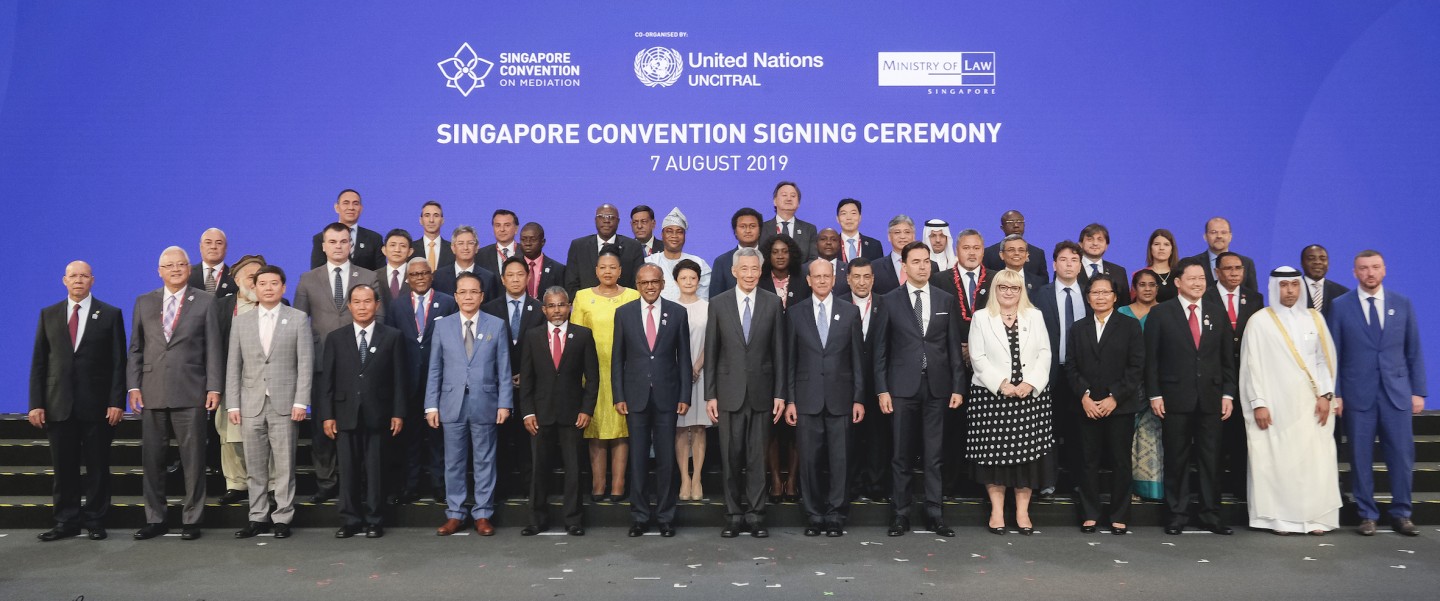
Singapore Convention on Mediation Signed

Peacemakers would like to congratulate UNCITRAL and all signees on the signing of the Singapore Convention on Mediation. The signing of the Singapore Convention on 7 August 2019 promises to be a pivotal moment for international commercial and investment mediation, and we look forward to continuing to build on our shared vision of access to justice worldwide.

List of Singapore Convention signees

  • Singapore
  • Afghanistan
  • Belarus
  • Benin
  • Brunei
  • Chile
  • China
  • Colombia
  • Congo
  • Democratic Republic of Congo
  • Eswatini
  • Fiji
  • Georgia
  • Grenada
  • Haiti
  • Honduras
  • India
  • Iran
  • Israel
  • Jamaica
  • Jordan
  • Kazakhstan
  • Laos
  • Malaysia
  • Maldives
  • Mauritius
  • Montenegro
  • Nigeria
  • North Macedonia
  • Palau
  • Paraguay
  • Philippines
  • Qatar
  • Republic of Korea
  • Samoa
  • Saudi Arabia
  • Serbia
  • Sierra Leone
  • Sri Lanka
  • Timor-Leste
  • Turkey
  • Uganda
  • Ukraine
  • United States of America
  • Uruguay
  • Venezuela

For a visual representation, check out this dynamic map of signees and ratifications courtesy of the International Mediation Institue at: https://my.visme.co/projects/9079q918-singapore-convention-signees-and-ratifications.

Peacemakers is proud to have been part of Singapore Mediation Week.

To know more about the Singapore Convention, please click here.


To make sure you donโ€™t miss out on regular updates from the Peacemakers Blog, please like us on Facebook and follow us on Instagram.

Peacemakers offers the services of internationally accredited mediators with extensive experience in resolving local and international conflicts. If you are involved in a dispute, let us know your requirements via email at mediate@peacemakers.sg, and we will recommend you the mediators that best meet your needs.

SCM Group Photo

Singapore Convention and the Human Spirit

On 12 August 2019, Mr Aloysius Goh published a blog post on Sage Mediation's website entitled โ€œSingapore Convention and the Human Spiritโ€. His blog post is reproduced in full below.


46 signatories for the Singapore Convention on Mediation! Wow!

I felt strangely emotional watching the 46 government officials walk on stage one-by-one to sign the United Nations Convention on International Settlement Agreements Resulting From Mediation.

What a journey it has been, personally and globally.

What lies ahead? How can those of us who feel for the spirit of service in mediation actively shape the narrative?

There is no doubt that the Singapore Convention is an important milestone. Singapore Prime Minister Lee Hsien Loong viewed that the Convention will help advance international trade, commerce and investment. When jurisdictions start to develop a robust global framework to manage conflicts, we can jointly prevent international commercial disputes from escalating unnecessarily or causing unintended consequence.

As the New York Convention did for arbitration, the Singapore Convention will foreseeably result in an increase in the use of mediation for conflict resolution over the next 10 years.

When more see the value that mediation can bring to their communities, there will be an exciting inflow of global talent to the mediation sector. This will re-define the narrative for mediation practice, and, at the higher level, the norms for conflict resolution.

The Asian Voice

Of the 46 jurisdictions that signed the Convention on the first day, 20 were Asian and this included China and India. Thatโ€™s more than half the worldโ€™s population. Compared to the arbitration convention, when only 3 of the first 24 signatories in 1958* were Asian (India, Pakistan, and Philippines), the significance is more than symbolic. It is more than a mere coincidence that an Asian jurisdiction was chosen to host the signing of the Mediation Convention.

Asia has the worldโ€™s fast growing middle class and will continue to be a key driver for the global economy for this Century. Critically, most Asian jurisdictions are only at a very early stage in the development of their commercial mediation infrastructure. In these jurisdictions, mediation remains primarily the domain of court-annexed centres and carried out by judges or court volunteers with minimal proper training and independent accreditation.

This is set to change. Commercial mediation is poised to explode in Asia, driven by the sheer volume of economic activity and by the strong preference for pragmatic solutions that take into account reputation and collective good. International mediation standards will have to evolve to more properly take into account Asian communication norms.

Asian governments have already made efforts to seize the initiative. Even before the Convention was signed, the Chinese government had emphasised that mediation will be an important part of the China International Commercial Court and the resolution of disputes arising from the Belt Road Initiative. The Indian government had also passed legislation to mandate that commercial disputes be first mediated.

The objectives are clear: Quickly develop an extensive pool of local mediation talent, establish leadership of international mediation, and shape a global dispute resolution platform in a way that is more synchronous with Asian values.

This desire to influence global norms should not be given an unfairly sinister overtone. On contrary, I think that it is an important acknowledgment of responsibility that flows from international economic leadership. With the extensive reach of Asian economies and businesses, the global dispute resolution platforms must be designed in an inclusive way so that the values and norms of this large group are given due respect.

A deep distrust of international courts and arbitration tribunals has underlied the resistance by some Asian leaders to have their disputes referred there. The sense is that the problem-solving and decision-making processes in adversarial processes would not properly give weight to the Asian priorities of harmony, reputation, and order.

The preference for consultation and collective decision-making suggests that if Asian governments take a more active leadership role in shaping the mediation standards, those standards would more readily give regard to the situation of the minorities and those who were previously regarded as โ€œunderdogsโ€. If they can succeed to develop standards which are fair and accepting of cultural standards of different jurisdictions, it would be a true mark of humanityโ€™s progress.

I am quietly confident of this.

One must believe that with the signatoriesโ€™ collective wisdom and resource, we can move away from binary processes which are highly attritive.

Technology and the growth of Mediation

This leads me to consider the other important element that arises from Asia taking the lead on mediation: the growing influence of digital technology. China, India, Japan, South Korea and Singapore are all home to some of the best tech minds in the world and their technology expertise are developing at breakneck speed.

In the next decade, there will be a further leap in artificial intelligence. The internet of things may well enter mediation practice. Many new devices and apps will be created to allow organisations and individuals to predict and prevent disputes from escalating, and to resolve disputes even more quickly. The advancements in communication and problem-solving tools will be beyond our imagination. I always thought that just as thereโ€™s โ€œFace Appโ€ that can make an immediate prediction on how we look at different ages, I think in no time thereโ€™ll be a โ€œTalkNicely Appโ€** that can help us to immediately reframe some of our angrier spur-of-the moment comments and also detoxify some of the same comments of others directed to us.

Technology will make the mediation process even more agile, strengthening its advantage of cost and time savings over traditional adversarial processes like litigation and arbitration (whose best use of technology for โ€œonline dispute resolutionโ€ has, in the past years, been tragically constrained to e-filing of documents and video-conferencing). Mediation-lingo will change. And, with the assistance of advanced data-analysis, the quality of mediated outcomes will be enhanced. Mediators will be able to deliver results which are even faster, more out-of-the box, and reach deeper than we can currently imagine.

I should qualify that I donโ€™t believe that mediators will be replaced by robots and artificial intelligence. The complexity of human interactions and our need for a human contact suggests that a face-to-face encounter with a fellow human seems best for problem-solving. (I must admit though I was somewhat impressed by the โ€œrobot priestโ€ at the Kodaiji Temple where the Japan International Mediation Centre in Kyoto may conduct some of their cases.)

The Heart of Mediation: the Mediators

Which brings me to the last and most important point of this long post.

A lot of the publicity has surrounded the enforceability of the mediated settlement agreements between the jurisdictions which ratify the Convention (read more here). With the US also being one of the first signatories, that also means more than half the global economy has signed. Itโ€™s only a matter of time that the other half does.

I feel, like many other passionate mediation supporters, that it is a privilege to witness the Mediation Convention signing in our lifetimes. It will indeed lend much credibility to our work as mediators.

However, it is also important to be constantly reminded that in the end, the mediated settlement agreement is always first and foremost a contract. What makes a contract enforceable should not be the threat of legal enforcement. Enforceability should be hinged on the signatories to the settlement agreement seeing the advantages to themselves if they performed their obligations under the contract.

Even as mediators take the Convention into account for their training, I think the overarching priority for accreditation should not change. A good mediator must always be recognised by his ability to uplift the spirit of the disputants from the dark despair that they confront when they have run out of tools to resolve the dispute on their own, to instil in them the hope that all is not lost, and to give them the power to transform that hope into a sustainable and real solution.

The Convention will move mediation beyond the realms of small claims conflict, and motivate individuals to make more than superficial investments of their time to develop expertise in mediation practice. Thereโ€™s definitely more than one good reason to be optimistic and excited for mediationโ€™s future.


*There were in fact only 10 jurisdictions which signed the NY Convention on Day 1. But, itโ€™s probably fairer to allow some discount as air-travel and communications were not as straightforward as it is today.

**If this hasnโ€™t already been developed, Iโ€™m staking claim to the originality of the idea right now!


To make sure you donโ€™t miss out on regular updates from the Peacemakers Blog, please like us on Facebook and follow us on Instagram.

Peacemakers offers the services of internationally accredited mediators with extensive experience in resolving local and international conflicts. If you are involved in a dispute, let us know your requirements via email at mediate@peacemakers.sg, and we will recommend you the mediators that best meet your needs.

peermediation

"What is Peer Mediation?" - A Simple Video Introduction

Peer mediation is problem-solving with youth, by youth. It is a process by which two or more students involved in a dispute meet in a safe and confidential setting to work their problems out with the assistance of a trained student mediator.

If you want to know what peer mediation looks like in action, here's a helpful little video to get you started!

(All video footage taken at the Peacemakers Conference 2018)


For moreย picturesย andย videosย of the Peacemakers Conference 2018, please visit theย Peacemakers Facebook Page.

As Singaporeโ€™s leading peer mediation experts,ย Peacemakersย has an extensive track record of managing and delivering conflict resolution training for youth at both local and international levels. If you would like to train your youth to better manage conflict, let us know how we can help via email atย mediate@peacemakers.sg.

4 Negotiation Techniques You Can Learn From Children FB

4 Negotiation Techniques You Can Learn From Children

by Ho Ting En

How many of us only think of professional negotiators and instructors when we want to learn more about negotiation? However, children themselves can actually be very good negotiators too! In this post, we will be looking at some negotiation techniques children use which we can adopt and adapt to be better negotiators.

Interestingly, a study conducted on preschool children who were presented with hypothetical conflict scenarios showed that 63% of them preferred negotiation as a conflict management strategy.8 This demonstrates that even children as young as 3 are capable of a mature understanding of conflict management.9 Of course, most young children will not be able to translate this understanding into concrete skills and they may also instinctively engage in positional bargaining. Nonetheless, here are four techniques we can learn from them.


(1) Be creative

Children are known to be imaginative. Childhood was probably the only period of our life when we โ€˜workedโ€™ a different occupation every day or played with dolls that โ€˜transformedโ€™ into mermaids.

We may already know that in negotiations, it is important to think creatively at the stage of generating options, so as not to box ourselves in. However, we can strengthen this notion by remembering how we were when we were younger. Children generally do not put down their ideas because they are โ€œimpracticalโ€ or โ€œstupidโ€, at least not until they grow older and become influenced by peers and society. This quality is said to be the underlying reason for childrenโ€™s special negotiating powers. Judgment hinders imagination, and imagination can be key to generating creative options that meet both partiesโ€™ needs in a much better way than a textbook solution. Therefore, we should not be afraid to be bold in playing with different possibilitiesย and to really use our imagination without fear of judgement.


(2) Be direct about your needs

Young children are very direct, so a child often says, โ€œI want this.โ€ Adults are less straightforward, knowing that being too direct offends people and comes across as rude. However, clarity is important and sometimes, revealing your needs in a round-about manner is ineffective. As Fisher says in Getting to Yes, the chance of negotiation serving your interests โ€œincreases when you communicate themโ€. There is also less room for misunderstandings because the more openly we communicate, the less basis there is for suspicion. Imagine a husband who does not want to eat out because he is on a temporary healthy diet. He is probably better off being truthful than to reject all the restaurants the wife has suggested by saying that he dislikes their service.


(3) Play the repeat game

Children like to repeat other peopleโ€™s words to irritate. We must have had at least one experience with a child who echoes us when we say, โ€œStop doing that!โ€ Although this is typical childish behaviour, such parroting exercise is something we can actually replicate in negotiations.

However, our aim of repeating is not to annoy, but to reassure. This is because repeating parts of what the other person has said can show there is a common vision, which can be helpful in moving stalled negotiations forward. If two parties are negotiating over profit-sharing of a business, you can repeat that the partner taking the bigger risk should receive larger share, even as you disagree on how this risk should be calculated.10 At the very least, repeating the other personโ€™s words can be a good way to summarise what you have heard to assure the other party that you have been listening.


(4) Find the right person to negotiate with

Finding the right person is a combination of checking out who would say โ€œyesโ€ and who has authority. Do you remember how as children, we look to the adult who is more likely to say โ€œyesโ€ because it increases the chances of getting what we want?

Similarly, as a negotiator, one way to increase success is to scope out the situation before making the first pitch, so as to choose the person who is more likely to react positively. Convincing one person first on the other negotiating team may also be a smart move in getting the eventual consensus of the entire team later. That said, a child will not ask his grandmother if he can have a dog if he knows that the true decision-making power lies with his mother. Likewise, we can approach someone who will say โ€œyesโ€ but should be mindful that it may not generate into a sustainable agreement if the person who says โ€œyesโ€ does not have authority or has no access to authority.


I hope this post has pointed out some of the interesting ways in which children can also be good negotiators. Perhaps the most valuable lesson we can draw from children is that they never give up. When they fail at one negotiation, they simply move on to the next one with just as much enthusiasm. At the end of the day, becoming a better negotiator is a process, and we can enhance this by learning from negotiations with those who are in the youngest and freshest phase of their lives. I hope this has been helpful!

To make sure you donโ€™t miss out on regular updates from the Peacemakers Blog, please like us on Facebook and follow us on Instagram.


Ting En is a graduate of National University of Singaporeโ€™s Faculty of Law. She studied Negotiation as an undergraduate, as well as Mediation for the Singapore Bar Examinations. She has an avid interest in working with children and has participated in many related projects, from organising sports activities for underprivileged children to giving weekly tuition at a childrenโ€™s home. During her time as an undergraduate, Ting En was also part of the committee in charge of the Innocence Project Singapore.

Peacemakersย offers the services of internationally accredited mediators with extensive experience in resolving local and international conflicts. If you are involved in a dispute, let us know your requirements via email atย mediate@peacemakers.sg, and we will recommend you the mediators that best meet your needs.


Lessons from Negotiating with Children_ Communicating Effectively and Building Relationships FB

Lessons from Negotiating with Children: Communicating Effectively and Building Relationships

by Ho Ting En

In this last part of a three-part series, we look at the interpersonal skills involved in a negotiation. This is a three-part series written based on the framework of the 7 Elements of Negotiation.ย For ease of reference and the convenience of readers, the links to Parts 1 and 2 are listed below:

Communication

Why is communication so important in a negotiation? Well, remember that in every negotiation, we are talking to someone who is not us. This sounds like I am just stating the obvious. However, conveying a message is not easy even for people with extensive amount of shared experiences. We carry our own assumptions and backgrounds that invariably influence the way we perceive messages we give and receive. In this regard, thinking about the way we communicate with children, with whom we cannot be more different from, forces us to evaluate the methods in which we convey our ideas. Here are 2 tips for better communication.

(1) Use short sentences:

We know long preambles do not work with children. This is why we break our sentences down into simple ones, and we instinctively speak in a succinct manner when communicating with children.

This technique is actually recommended for negotiations too. A negotiator should speak clearly to promote understanding. The longer the statement, the greater the chance of misinterpretation. One can avoid this risk by breaking complex messages into small parts and allowing pauses so that the other party can digest the information.11

(2) Do not trivialise the other sideโ€™s emotions; acknowledge them:

When a child reacts strongly in some way, telling the child, โ€œI understand that you are angry, butโ€ฆโ€ may be more effective than saying dismissively, โ€œThis is nothing to get angry over.โ€ Such a response acknowledges the childโ€™s emotions with regard to his or her problems, which may take us one step closer towards resolution. In the same vein, we should not gloss over the other negotiating partyโ€™s position and feelings by trivialising them. Just as we acknowledge a childโ€™s fears and insecurities, we should not ignore an adultโ€™s emotions by thinking that they are necessarily insignificant. What we can do instead is to recognise that the feeling is valid, but that perhaps we can resolve and move past it for a successful negotiation.

One powerful form of acknowledgment of the other personโ€™s feelings is an apology. A lesson we learn as children is that if we say, โ€œIโ€™m sorryโ€, our parents will not be angry anymore. Somehow, this is something we either forget or unlearn as we grow up. There is an example of a Columbia law professor whose 8-year-old son sat in his class because he could not find a babysitter. When the professor asked the contract class what the seller should do after having defaulted on delivery and the buyer stopped payment, his son spoke up, โ€œI would say Iโ€™m sorry.โ€12 A classic contractual discussion on who is liable to pay damages turned out to be a valuable negotiation lesson.

Even if the other side is primarily responsible, we can still consider apologising for our part. The aim of this is to take responsibility for our share and our apology may bring about a corresponding acceptance of responsibility from the other side. This will then be a good step towards resuming a working relationship. However, an apology should be sincere. One quality of an effective apology in negotiations is that it should be the consequence of some analysis and introspection. If it comes off too spontaneously, it loses power and legitimacy.13

Relationship

Humans react, and what we do instinctively in a difficult situation is to act first, think later. However, as a quote from Ambrose Bierce goes, โ€œSpeak when you are angry and you will make the best speech you will ever regret.โ€ Sometimes, it may be better to stop negotiating temporarily in order for the relationship between both parties to resume its functional state.

Children throw tantrums because they think this is how they can get what they want.ย  In response, some parents utilise the โ€œ1-2-3โ€ technique, which is a form of time-out. This supports the stopping of negotiation with children, which some of us may find surprising. However, this may be needed when the child simply has no interest in listening to any constructive arguments. In such situations, say firmly, โ€œThatโ€™s one,โ€ when the child whines. If he persists, say, โ€œThatโ€™s twoโ€. The final warning comes, โ€œThatโ€™s three,โ€ and the child is brought out of the room for a five-minute break. The point of this is to remove emotions from the discipline. Usually, the child returns with a glare but the fury has subsided and he is more likely to listen.

In situations when to continue negotiating is to create more conflict, a time-out to remove emotions is equally needed. Of course, in contrast to the โ€œ1-2-3โ€ response where the child is taken out, here we are not removing the other party but ourselves from the emotional setting. It has been said that the easiest technique to minimise the impact of strong emotions is to interrupt the encounter with a short break. One way to achieve this is to suggest a coffee break. This removes negative emotions, and also provides opportunities for parties to cool down.

Where a break is not possible, some negotiators find that one of the most effective solutions is to remember the power of not reacting.14 William Ury inadvertently angered President Chavez on their first meeting when he was mediating between Chavez and his opposition in Venezuela. Instead of reacting, Ury waited for an hour until Chavez calmed down, before he started talking again. This time, Chavez was much more receptive to what Ury had to say.ย Similarly, rather than responding to the other sideโ€™s tantrums, it may be more powerful to exercise self-control and keep our focus on our objective of being in the negotiation.

Even as we are adults, we are still emotional beings. Thus, negotiating with children is a good reflection of negotiations which involve heightened feelings, difficult negotiators, or the inability to articulate the reasons behind our views. This is the last part of a series on lessons learnt from negotiating with children. I hope they has been helpful, and I wish you all the best with your future negotiations!

To make sure you donโ€™t miss out on regular updates from the Peacemakers Blog, please like us on Facebook and follow us on Instagram.


Ting En is a graduate of National University of Singaporeโ€™s Faculty of Law. She studied Negotiation as an undergraduate, as well as Mediation for the Singapore Bar Examinations. She has an avid interest in working with children and has participated in many related projects, from organising sports activities for underprivileged children to giving weekly tuition at a childrenโ€™s home. During her time as an undergraduate, Ting En was also part of the committee in charge of the Innocence Project Singapore.

Peacemakersย offers the services of internationally accredited mediators with extensive experience in resolving local and international conflicts. If you are involved in a dispute, let us know your requirements via email atย mediate@peacemakers.sg, and we will recommend you the mediators that best meet your needs.


Lessons from Negotiating with Children_ Generating Options and Finding Solutions FB

Lessons from Negotiating with Children: Generating Options and Finding Solutions

by Ho Ting En

In Part 1, we looked at understanding and obtaining interests of the other party to the negotiation. In this second part, we turn to the next step โ€“ generating options. This is a three-part series written based on the framework of the 7 Elements of Negotiation, which has been described in Part 1.

When we talk about option generation, we are looking at the process of brainstorming and generating variety of possibilities. At this stage, the key is to be creative and not limiting ourselves to only one idea as deciding on the option which becomes the final solution comes later. Here are 3 ways in which negotiating with children can hone our skill in this regard.

(1) Do not be fixated with the end goal:

Most parents agree that having a well-prepared plan to reach the goal is good, but not fool-proof. Children will somehow cause these plans to go awry. Sometimes, we are so focused on the end point that we want to get there in the most direct manner. However, if you have interacted with young children before, you would probably know that you are not going to reach the supermarket by driving straight to the store. The kids may be distracted; they may want a detour for ice-cream; or they might want to ride their scooters there. You will end up negotiating with your children on how to reach there, but thatโ€™s okay. The route you ultimately settle on may in fact be the best route for bringing everyone happily to the store.

In the same vein, we should be well-prepared for a negotiation but be mindful not to restrict ourselves to only one fixed option in reaching the goal. For example, I may have received defective goods from a supplier. Instinctively, I may directly demand for compensation, which after all, seems like the fastest option. However, if I take a step back rather than being fixated on wanting to settle the matter, I might see other options, such as requesting the supplier to undertake rectification of the defects. I could also ask for a replacement batch. Perhaps, I can keep the goods which are satisfactory and return the defective ones to the supplier. After all, my end goal and interest is to end up with goods that are of good quality.

By being open to the possibilities, we may just end up discovering a new route and/or inventing an option which we would not have seen if our eyes were fixated on the end goal. Having more options also means more chances of finding a solution which meets both partiesโ€™ interests.

(2) Invite the other party into generating options:

Imagine a child who wants to use the iPad. Rather than taking it away, you can discuss with the child on what she is using the iPad for and when she wants to use it. This can lead to the child coming up with a list of โ€œthings to doโ€ before she can use the device. When the child participates in this decision-making, she is more likely to feel involved and be invested in the solution.

Similarly, in a negotiation, it is not as effective if parties arrive at an agreement with only one side pushing the process. Instead, we can invite the other party in generating options with us. This increases sense of joint ownership over the ideas and may motivate us to reach an agreement more quickly. Thus, while a salesman typically throws out a few options, and the customer chooses one, it may be better if the customer is allowed to build on the solutions offered and jointly work with the salesman for improved options15.

(3) Being flexible

Children especially like to negotiate on the amount of homework they are given, or the work they have to finish in class. Sometimes, I give them different options. Do they want to finish 2 sheets of questions during lesson and take 2 sheets home? Or do they want to finish all 4 at home? Or do they want to stay back a little and finish all 4? During this discussion, the child considers different factors, such as their free time at home, the time spent waiting after class for parents to pick them up, or whether they are really tired that day or not. More often than not, we then arrive at an acceptable outcome for us both. Rather than imposing strict instructions on them all the time, I find that occasional flexibility can work well on children.

In a negotiation, we can also be flexible, for example in terms of quantity and deadlines, so long as doing so will not compromise any bottom-lines, the quality or the project itself. Say a supplier has trouble delivering just for the month of June, but will be able to make up for the shortfall in quantity in July. In such a situation, the buyer can consider being flexible and agree to an option of delayed delivery so long as this does not affect the buyer adversely. This is especially so if the relationship between the buyer and supplier is something worth maintaining.

Through Part 1 and Part 2, we can better understand how to derive Interests and Options, which are two elements that help us in reaching an agreement. In the last part, we will look at the elements of Communication and Relationship, which are more about soft skills and interactions with people.

To make sure you donโ€™t miss out on regular updates from the Peacemakers Blog, please like us on Facebook and follow us on Instagram.


Ting En is a graduate of National University of Singaporeโ€™s Faculty of Law. She studied Negotiation as an undergraduate, as well as Mediation for the Singapore Bar Examinations. She has an avid interest in working with children and has participated in many related projects, from organising sports activities for underprivileged children to giving weekly tuition at a childrenโ€™s home. During her time as an undergraduate, Ting En was also part of the committee in charge of the Innocence Project Singapore.

Peacemakersย offers the services of internationally accredited mediators with extensive experience in resolving local and international conflicts. If you are involved in a dispute, let us know your requirements via email atย mediate@peacemakers.sg, and we will recommend you the mediators that best meet your needs.


peacemakers_clear

Copyright 2026 © All Rights Reserved